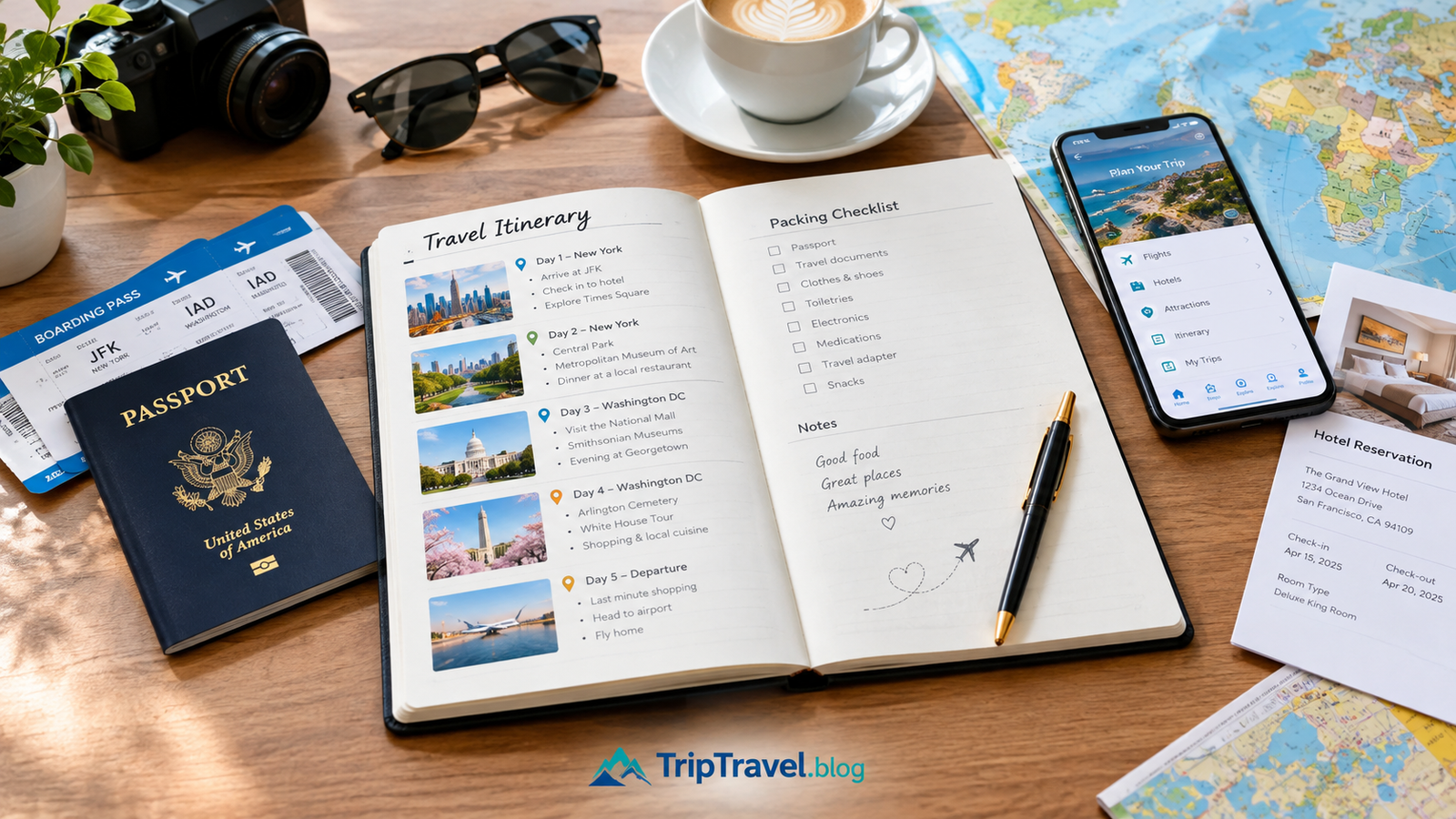
Planning a vacation can be exciting, but organizing flights, hotels, transportation, activities, reservations, meals, budgets, and important documents can quickly become confusing. A good travel itinerary template gives you one organized place to manage the most important details of your trip. A travel itinerary template is useful whether you are planning a weekend getaway, family […]
Planning a vacation can be exciting, but organizing flights, hotels, transportation, activities, reservations, meals, budgets, and important documents can quickly become confusing. A good travel itinerary template gives you one organized place to manage the most important details of your trip.
A travel itinerary template is useful whether you are planning a weekend getaway, family vacation, romantic vacation, solo adventure, road trip, or international journey. Instead of keeping booking confirmations and travel notes in different places, you can organize everything into one simple plan.
The best travel itinerary template does not require you to schedule every minute. It gives your trip enough structure to keep things organized while leaving room for rest, unexpected discoveries, weather changes, and spontaneous experiences.
This guide explains how to create a practical travel itinerary, what information to include, how to organize each day, how to manage a travel budget, and how to avoid common itinerary mistakes.
What Is a Travel Itinerary?

A travel itinerary is a detailed plan showing the important parts of your trip. It can include your travel dates, destinations, transportation, accommodation, attractions, activities, restaurant reservations, estimated expenses, and important travel information.
A travel itinerary template makes this process easier because you can use the same basic structure for different vacations.
A useful itinerary can include:
• Trip dates
• Destinations
• Flight information
• Airport details
• Hotel reservations
• Transportation
• Activities
• Attractions
• Restaurant reservations
• Estimated costs
• Travel insurance information
• Passport and visa reminders
• Emergency contacts
• Booking confirmation numbers
The purpose of a travel itinerary template is not to control every moment of your vacation. Instead, it helps you understand what is happening each day and where you need to be.
For first time travelers, this organization can make trip planning much easier. Experienced travelers can also use a travel itinerary template to save time and keep complicated vacations organized.
Why Use a Travel Itinerary Template?
Creating an itinerary from scratch for every vacation can take a lot of time. A reusable travel itinerary template gives you a reliable starting point.
A well prepared travel itinerary can help you avoid forgotten reservations, unrealistic schedules, unnecessary transportation, and unexpected expenses.
A travel itinerary template is especially useful when traveling with family or friends. Everyone can see the planned activities, accommodation information, transportation details, and important reservations.
It can also make budgeting easier. When flights, hotels, transportation, food, attractions, and other expenses are organized together, you can get a clearer idea of your total vacation cost.
For international travel, an itinerary can be even more valuable. You may need to keep track of passport information, entry requirements, hotel addresses, transportation confirmations, travel insurance information, and emergency contacts.
A good travel itinerary template keeps these details accessible without making your trip unnecessarily complicated.
Basic Travel Itinerary Template
Start your travel itinerary with a simple trip overview. This gives you a quick summary before you organize individual days.
Trip name: Your destination or vacation name
Travel dates: Departure date through return date
Travelers: Number of travelers
Main destination: City, region, or country
Transportation: Flight, train, bus, rental car, cruise, or combination
Accommodation: Hotel, resort, vacation rental, or other lodging
Estimated trip budget: Expected total spending
Emergency contact: Important contact information
Travel insurance: Provider and policy information if applicable
Important documents: Passport, visa, tickets, reservations, and insurance information
After completing the overview, create a daily travel itinerary for each day.
A daily section can include:
Date
Location
Morning activity
Lunch
Afternoon activity
Dinner
Evening activity
Transportation
Reservation information
Estimated spending
Notes
This travel itinerary template can be adjusted according to the type of vacation you are planning.
For a short city trip, you may need only a few daily sections. For a two week international vacation, you may need a much more detailed travel itinerary.
How to Build a Travel Itinerary Step by Step
travel itinerary template The easiest way to create a travel itinerary is to build it in stages.
First, choose your travel dates and destinations. Decide how many days you have and which cities or regions you want to visit.
Next, organize major transportation. This could include flights, trains, buses, rental cars, or other transportation options.
After transportation, choose your accommodation. Look for hotels or other lodging options that fit your budget and make sense for your planned activities.
Then create a list of attractions and experiences you want to enjoy. Separate your must see activities from things you would like to do if time allows.
Finally, organize your activities according to location. Try to visit attractions that are close to each other on the same day. This can reduce unnecessary transportation and give you more time to explore.
A simple planning process for your travel itinerary template is:
Dates
Destinations
Major transportation
Accommodation
Important activities
Reservations
Local transportation
Food plans
Budget
Travel documents
Free time
This approach makes a travel itinerary easier to manage because you are not trying to solve every planning decision at the same time.
How to Plan Each Day Without Overplanning
One of the biggest itinerary mistakes is trying to fit too many activities into a single day.
Imagine visiting New York City and trying to see the Statue of Liberty, Central Park, Times Square, a museum, several restaurants, and multiple neighborhoods in one day. The attractions may look manageable when you first create your list, but transportation, walking, security, queues, meals, and unexpected delays can take much longer than expected travel itinerary template.
A better travel itinerary focuses on priorities.
For example:
Morning: Major attraction
Late morning: Nearby neighborhood
Lunch: Local restaurant
Afternoon: Museum or scenic attraction
Late afternoon: Free time
Evening: Dinner
This structure gives you a clear plan without making the day feel like a race.
Your travel itinerary template should also include transportation time. If an attraction takes 40 minutes to reach, allow enough time for the complete journey rather than scheduling another activity immediately afterward.
Families, older travelers, and travelers who need additional accessibility time should allow extra space between activities.
Travel Itinerary Example for a Three Day Trip
A three day vacation can be organized around major attractions, neighborhoods, food, and free time.
Day one should usually be relatively relaxed. After arriving at your destination, check into your accommodation and explore the surrounding area. A nearby attraction and a comfortable dinner can be better than a packed sightseeing schedule.
Day two can be your main sightseeing day. Choose two or three important attractions and combine them with nearby activities.
Day three can focus on experiences you missed earlier. Depending on your departure time, you might visit a market, park, museum, shopping district, or local landmark.
Here is a simple example for your travel itinerary template:
| Day | Morning | Afternoon | Evening |
|---|---|---|---|
| Day One | Arrival | Hotel and nearby area | Dinner |
| Day Two | Major attraction | Museum or neighborhood | Dinner and sightseeing |
| Day Three | Local attraction | Shopping or free time | Departure |
The activities should always be adjusted to the destination, travel time, opening schedules, personal interests, and energy level.
How to Include Flights and Transportation
Transportation information is one of the most important parts of a travel itinerary.
Record the airline or transportation company, departure location, arrival location, travel date, scheduled time, confirmation number, and baggage information when relevant.
Your travel itinerary template should also show how you will get to and from airports or stations.
For example, a flight might depart early in the morning, but you still need enough time for transportation to the airport, check in, baggage procedures, security, and boarding.
For road trips, include driving time, fuel stops, rest breaks, parking information, tolls, and overnight locations.
For public transportation, record the station, route, departure time, arrival location, and any important transfer information.
Transportation schedules can change, so verify important details before departure and update your travel itinerary when necessary.
How to Add Hotels and Accommodation
Your accommodation section should contain more than the property name.
Include the hotel or accommodation name, address, check in date, check out date, confirmation number, cancellation conditions, and important notes.
You can also record check in and check out times if they affect your daily plans.
When comparing hotels, consider location as well as price. A cheaper hotel far from the attractions you want to visit may cost more overall if you spend significant amounts on transportation.
Your travel itinerary template can also include the accommodation neighborhood. This makes it easier to understand which attractions are nearby.
Families may want to check room capacity and family friendly amenities. Couples may prioritize location and dining. Solo travelers may prefer accommodation near convenient transportation.
Always verify current hotel prices, availability, policies, and cancellation conditions before making final decisions.
How to Plan Activities and Attractions
Start by creating a master list of attractions and experiences.
Then divide your list into three categories:
Must see
Would like to see
Only if there is time
This simple approach keeps your travel itinerary realistic.
Research whether attractions require advance reservations. Popular museums, guided tours, cruises, observation decks, national parks, and special experiences may have timed entry or limited availability.
Geography also matters. Your travel itinerary should group attractions that are reasonably close together whenever possible.
Check attraction operating days and seasonal schedules before finalizing your plan. Opening hours, admission prices, reservation requirements, and temporary closures can change.
A good travel itinerary template should therefore leave space for updated information rather than assuming that every detail will remain unchanged.
How to Build a Travel Budget Into Your Itinerary
Adding a budget to your travel itinerary can help you make better decisions before and during your vacation.
Divide your estimated spending into categories such as:
Flights or long distance transportation
Accommodation
Local transportation
Food
Attractions
Tours
Travel insurance
Shopping
Parking and tolls
Taxes and fees
Emergency spending
Do not look only at the advertised price. Additional expenses can include baggage fees, airport transportation, parking, taxes, tips, booking fees, and other charges.
A travel itinerary template can include an estimated daily budget. You can record your expected spending for meals, transportation, attractions, and miscellaneous purchases.
You can then compare your daily estimates with your overall vacation budget.
One useful strategy is to decide where spending more provides meaningful value. You might choose a special guided experience while saving money on other meals or transportation travel itinerary template.
How to Make an International Travel Itinerary
International travel requires additional preparation because entry requirements and travel regulations can vary between countries.
Before departure, verify passport requirements, visa requirements, electronic travel authorization requirements, customs rules, and other entry information through official government sources.
Do not rely on an old travel itinerary or information copied from another traveler because requirements can change.
Your international travel itinerary should include:
Passport information
Visa information when required
Flight details
Airport transportation
Hotel addresses
Travel insurance details
Emergency contacts
Local transportation information
Important travel documents
Local currency information
Government or consular contact information
A travel itinerary template can make international planning easier because all these details can be kept in one organized document.
For important documents, consider secure digital copies and appropriate offline access when practical.
How to Make Your Itinerary Flexible
A travel itinerary should provide structure without making your vacation stressful.
Leave open periods during the trip. Free time allows you to rest, explore a neighborhood slowly, return to a favorite attraction, deal with delays, or discover something that was not part of the original plan.
Your travel itinerary template can label some activities as flexible.
For example:
Morning: Must do activity
Afternoon: Flexible
Evening: Restaurant reservation
This gives your day direction while keeping room for changes.
Weather is another reason to maintain flexibility. Outdoor activities may need to be moved when weather conditions are unfavorable, so consider having indoor alternatives.
Avoid scheduling an important attraction immediately before a flight or long distance journey. A delay earlier in the day could affect your transportation.
The best travel itinerary is flexible enough to adapt without losing the overall structure of the trip.
Common Travel Itinerary Mistakes to Avoid
Even experienced travelers can create itineraries that look perfect on paper but become stressful during the actual vacation.
One common mistake is planning too many destinations. Moving between cities takes time, even when the distance seems short.
Another mistake is ignoring transportation time. Walking, traffic, parking, public transportation, security procedures, and waiting can all affect your schedule.
Do not reserve every meal and activity unless there is a genuine reason. Too many reservations can make your vacation feel like a series of appointments.
Another mistake is assuming attractions will always be open. Check current information before visiting.
Travelers should also avoid forgetting rest time. Long flights, jet lag, early mornings, and extensive walking can affect your energy.
Your travel itinerary template should help you enjoy the destination rather than simply collect as many attractions as possible.
Travel Itinerary Tools and Organization Tips
You can create a travel itinerary using a spreadsheet, document, notes application, calendar, or travel planning service.
A spreadsheet works well when you want detailed information about dates, activities, reservations, and expenses.
A digital calendar can be useful for timed reservations and transportation.
A document can work well when you want one complete travel itinerary that can be printed or shared.
Your travel itinerary template can also include a compact emergency section containing:
Hotel contact information
Transportation confirmation numbers
Travel insurance information
Emergency contacts
Important government contact information
For longer vacations, separate confirmed bookings from ideas that you have not booked yet. This prevents confusion between something that is already reserved and something that you are only considering.
How to Turn the Template Into a Reusable Trip Planner
The biggest advantage of a travel itinerary template is that you can reuse it for future vacations.
Save your basic structure and duplicate it whenever you begin planning another trip.
Keep the main sections simple:
Trip overview
Transportation
Accommodation
Daily itinerary
Budget
Reservations
Documents
Emergency information
Packing reminders
Then customize the travel itinerary according to your destination.
For a road trip, you can expand transportation details. For international travel, you can add more documentation information. For a family vacation, you can include child friendly activities and additional rest periods.
For a luxury vacation, you might add more space for fine dining reservations, premium transportation, hotel services, and exclusive experiences.
The template should adapt to your trip rather than forcing every vacation into exactly the same structure.
Final Travel Itinerary Checklist
Before leaving home, review your travel itinerary one final time.
Confirm your travel dates.
Check flight or transportation information.
Confirm accommodation reservations.
Review cancellation policies.
Verify attraction reservations.
Check transportation between major locations.
Review passport and entry requirements when traveling internationally.
Check travel insurance information if applicable.
Estimate your available spending budget.
Save important confirmation numbers.
Check the latest weather forecast before departure.
Make sure you can access essential documents.
Allow enough time for airport or station procedures.
Keep some unplanned time available.
This final review can catch small mistakes before they become expensive or stressful problems.
Conclusion
A well organized travel itinerary can make vacation planning easier and more enjoyable. The best approach combines confirmed reservations, realistic travel times, important activities, accommodation information, transportation details, and a practical budget.
A travel itinerary template gives you a repeatable system for organizing these details. Start with your dates and destinations, arrange transportation and accommodation, choose the experiences that matter most, and organize activities according to location.
Then add your budget, reservations, documents, and flexible periods.
Whether you are planning a weekend city trip, family vacation, international adventure, road trip, or multi destination journey, a travel itinerary template can help you save time, reduce avoidable stress, control unnecessary spending, and make better travel decisions.
The best itinerary is not necessarily the busiest itinerary. It is the plan that gives you enough organization to enjoy your destination while leaving enough freedom to experience the trip naturally.
FAQs
What should a travel itinerary include?
A travel itinerary should include travel dates, destinations, transportation, accommodation, important activities, reservations, estimated expenses, travel documents, and useful contact information. You can also include flexible periods for rest and unexpected opportunities.
How do I create a simple travel itinerary?
Start with your travel dates and destinations. Add transportation and accommodation first. Then choose your most important activities and organize them according to location. Add realistic travel time, your budget, reservations, documents, and free time.
Should I plan every day of my vacation?
You do not need to plan every minute. A better travel itinerary includes important activities while leaving some free time. This makes it easier to handle weather changes, delays, fatigue, and spontaneous experiences.
Can I use a travel itinerary template for international travel?
Yes. A travel itinerary template is especially useful for international vacations because you can organize flights, accommodation, transportation, insurance information, documents, and entry requirements in one place. Always verify current requirements through official sources.
How far in advance should I make a travel itinerary?
The ideal planning time depends on your destination, travel dates, and season. Major transportation and accommodation may need earlier planning during busy periods. Activities and restaurant choices can often be refined closer to departure.
Should I include my travel budget in the itinerary?
Yes. Adding transportation, accommodation, food, attractions, local transportation, insurance, and miscellaneous expenses can help you understand the likely total cost of your trip.
Is a digital itinerary better than a printed itinerary?
Both can be useful. A digital travel itinerary is easy to update, while a printed version can be helpful if your phone battery is low or internet access is unavailable. Keeping important information accessible in more than one format can be practical.
How can I make an itinerary less stressful?
Choose a few important experiences each day, group nearby attractions together, allow realistic transportation time, avoid excessive reservations, and leave free time. Your travel itinerary should support your vacation rather than make every moment feel scheduled.
What is the biggest travel itinerary mistake?
One of the biggest mistakes is trying to do too much in one day. Travelers often underestimate transportation time and overestimate how many attractions they can comfortably enjoy. A realistic travel itinerary usually creates a better experience.
Can a travel itinerary help save money?
Yes. A travel itinerary can help you compare transportation, accommodation, activities, and food costs before your trip. Grouping nearby attractions can also reduce unnecessary transportation expenses and wasted time.